Next goal: 5
Nomination created on October 1, 2026

Astronomer and researcher at Nordita, Stockholm

Conversations about science, technology, history, philosophy and the nature of intelligence, consciousness, love, and power. Lex is an AI researcher at MIT and beyond.
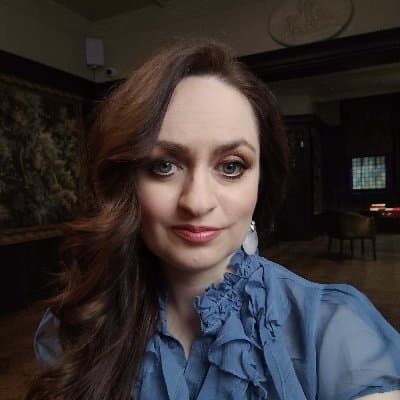
Beatriz Villarroel is one of the few working astronomers applying standard observational methods to a question usually left to speculation: whether any of the countless points of light in historical sky surveys have simply vanished or appeared, which would be hard to explain with known astrophysics. As lead of the VASCO project, she mines decades-old photographic plates with modern image analysis — an approach that turns archival data into a testable SETI search rather than an anecdote-driven one, and that has produced peer-reviewed results and candidate transients worth interrogating. For Lex's audience, she represents the productive middle ground between institutional astronomy and the UAP question: she takes the possibility of non-human technology seriously enough to design experiments, while insisting on data, replication, and falsifiability. A long-form conversation with her clarifies what is genuinely anomalous, what is likely instrumental artifact, and why that distinction is the whole ballgame.
Champion Hub
4 people want this. Add your vote.
0 of 6 done
Champion Hub
Every way to move this nomination, in one place.
Record a short video telling everyone why this dialogue should happen. Your clip gets featured right here.
Oct 1, 2026
🚀 Nomination created: Beatriz Villarroel is one of the few astronomers treating the search for non-human artifacts as a tractable observational problem — vanishing stars, anomalous transients, and unexplained objects on decades-old photographic plates — and Lex Fridman's long-fo…🚀 Nomination created: Beatriz Villarroel is one of the few astronomers treating the search for non-human artifacts as a tractable observational problem — vanishing stars, anomalous transients, and unexplained objects on decades-old photographic plates — and Lex Fridman's long-form format is well suited to stress-testing that work on the record.
Oct 1, 2026
📡 Why now: Scientific and congressional interest in anomalous aerial and orbital phenomena has kept building since NASA's September 2023 independent UAP study report and the November 2024 House Oversight UAP hearing, while Villarroel's VASCO surveys sit at the observational end…📡 Why now: Scientific and congressional interest in anomalous aerial and orbital phenomena has kept building since NASA's September 2023 independent UAP study report and the November 2024 House Oversight UAP hearing, while Villarroel's VASCO surveys sit at the observational end of that same question.
Suggested
Guilt by Association: How Astronomy Punishes Anomaly Hunters
Villarroel has written and spoken publicly about being harassed and professionally sabotaged within the astronomy community for pursuing UAP-adjacent research — and even faced blowback for collaborating with exoplanet pioneer Geoff Marcy. For a podcast obsessed with the sociology of scientific progress, this is essential territory.
Should mainstream astronomy journals be required to assign reviewers with UAP literacy, or is the current blind-review system actually the fairest filter her work can get?
She's spoken publicly about desk-rejections and prolonged review times she attributes to stigma, but she's never been asked to prescribe a concrete institutional fix. This forces a position she hasn't cleanly taken — and one that matters for the whole field of anomalistics.
Watters vs. VASCO: Is the Pre-Sputnik Evidence Holding Up?
A peer-reviewed critique by Wesley Watters et al. published in 2026 directly challenges Villarroel's core statistical claims about the Palomar transients — and she's already fired back in a preprint. This is the live scientific fight that Lex's audience will want to hear adjudicated in real time, not in jargon-heavy abstracts.
What's a Key Catalyst?
A Key Catalyst is someone whose voice carries trust. By sharing or supporting this nomination, they help ensure the right conversations actually happen.
Rally support from known voices who can help accelerate this nomination

Harvard astrophysicist
Why Their Voice Would Be Valuable
He would care about this discussion because his work with the Galileo Project and the search for technosignatures aligns closely with Villarroel's research on anomalous space objects.

Senior astronomer at the SETI…
Why Their Voice Would Be Valuable
Shostak explores the search for extraterrestrial intelligence, meaning Villarroel's work on unusual optical transients as potential technosignatures falls squarely into his dialogue.

Physicist and podcast host
Why Their Voice Would Be Valuable
He would share this episode because he frequently interviews cosmologists and has previously featured Villarroel's work on his podcast.

Theoretical astrophysicist and science communicator
Why Their Voice Would Be Valuable
Mack frequently breaks down unusual concepts in astronomy for a wide public audience, fitting her lane of public engagement naturally.

Search for extraterrestrial life organization
Why Their Voice Would Be Valuable
They monitor any credible scientific framework like the VASCO project that uses archival data to look for anomalous technosignatures or megastructures.
🚨The Evidence Might Already Exist We Just Never Looked Beatriz Villarroel isn't scanning the sky for UFOs in real time. She's digging through astronomical photographs taken before satellites even existed. Working with glass plates from the 1950s, Villarroel found star like

🚨Ross Coulthart Just Interviewed Dr. Beatriz Villarroel, And It Might Be the Most Important UAP Interview Ever! Ross Coulthart caught up with astrophysicist Dr. Beatriz Villarroel, and this news is historic. Her new papers, were both peer reviewed and published, the papers

Dr. Beatriz Villarroel explains the nuclear UFO connection in her "transients" study. They found a 68% increase of UFO transients appearing above Earth's atmosphere a day after a nuclear test. And an additional increase in transients whenever UFO sightings were reported on
Why Their Voice Would Be Valuable
Graves focuses on atmospheric anomalies and sensor data, intersecting directly with Villarroel's work analyzing transient flashes tied to historical sky surveys.